

See how the codebase fits together and what a change could affect.
Setsumei derives architecture from code relationships: subsystems, shared foundations, entry points and bottlenecks. Use that model to orient engineers, focus review and inspect dependencies around a change. Return to the analysis whenever the next question arises.
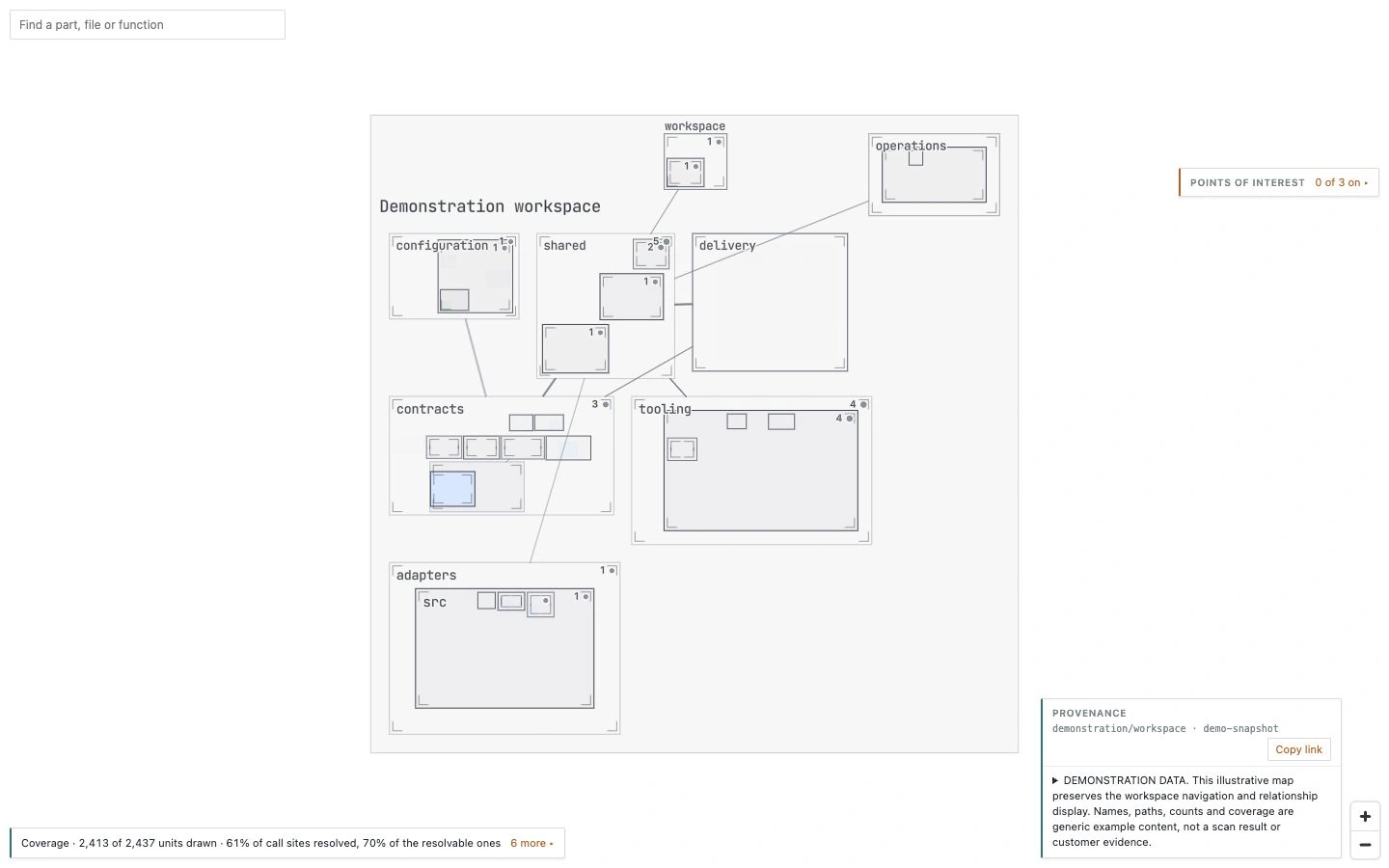
The displayed areas are folder-derived groups, distinct from graph-inferred subsystem analysis.
Beyond the list of files in the repository.
Use the graph to explain the system and test the explanation.
Generate an architecture document from the structural model, inspect the relationships behind it, and return to the analysis when planning a change. The document includes subsystem detail and a dependency diagram; optional model-written descriptions are checked against structural data. Your team adds intent, business constraints and production context.
Use architecture documentation to
- Explain the analyzed system in a readable architecture document
- Give a new engineer a structured starting point
- Add concepts, conventions and intent that source relationships cannot establish
Return to relationship evidence
- Before a refactor crosses subsystem boundaries
- When onboarding into unfamiliar code
- When deciding which risk to investigate first
- When a coding agent needs dependency context
Test it against a change your team is already planning.
Use Setsumei in your environment to compare the local brief, supporting relationships and agent queries with the context your engineers need.